BIOGRAPHY
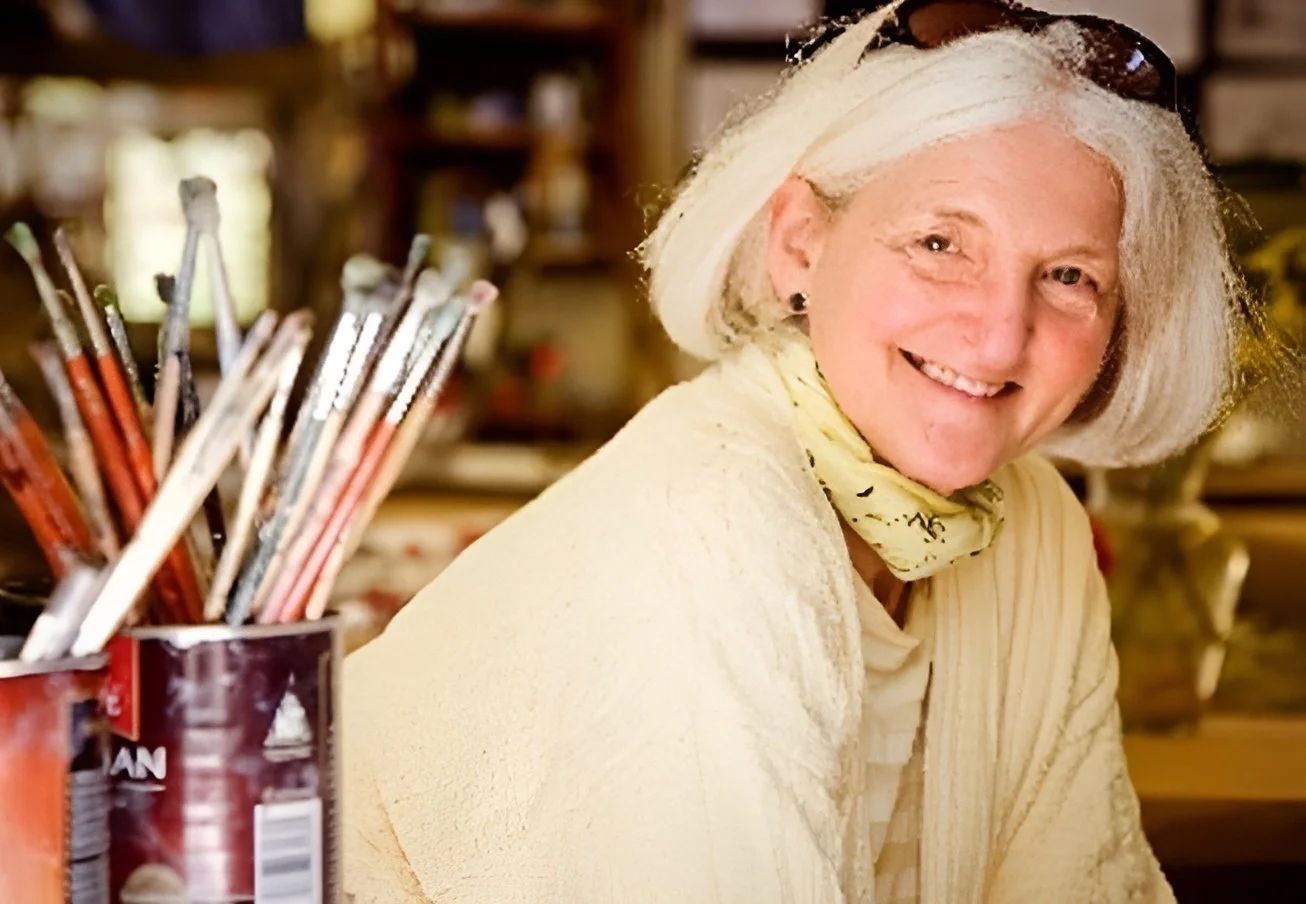
Judith Austen is an American painter whose work explores observation, atmosphere, memory, and place.
Raised in Great Neck, New York, Austen studied at Pratt Institute before continuing graduate work in art education in Boston. For nearly three decades she taught art in Cambridge, Massachusetts while maintaining an active studio practice and exhibiting throughout New England.
After relocating to Tucson, Arizona, Austen's work expanded to include the distinctive light, color, and plant life of the Sonoran Desert. While landscapes, water studies, dream imagery, and still life remain recurring themes, recent work has focused on the intimate relationship between people and the environments they inhabit.
Working primarily in oil, Austen approaches painting as an act of sustained attention. Whether painting a cactus in a clay pot, a shifting reflection on water, or a house held in afternoon light, her work seeks not merely to describe a place, but to convey the experience of being there.
She lives and works in Tucson, Arizona.
ARTIST STATEMENT
Painting allows me to slow down and pay attention.
I am drawn to subjects that reveal themselves gradually: reflections moving across water, a potted cactus catching late afternoon light, a familiar house transformed by weather or season. What begins as observation often becomes something more personal: a record of atmosphere, memory, and emotional presence.
My work is less concerned with documenting a place than with translating how it feels to inhabit it. Through painting, ordinary subjects become opportunities to explore resilience, beauty, impermanence, and our relationship to the environments we call home.
The longer I paint, the more I believe attention itself is an act of reverence.
SELECTED CV
Selected exhibitions, education, awards, publications, press, and professional experience.
-
1980
MFA in Art Education, Boston University, Boston, Massachusetts1969
MA in Elementary Education, Bank Street College of Education, New York, New York1965
BFA, Pratt Institute, Brooklyn, New York. Studied illustration and graphic art with Fritz Eichenberg, including woodcut and linocut. -
2026 Chubasco, Raices Taller 222 Art Gallery, Tucson, Arizona; group exhibition, June 27–August 9.
2026 Papel (Paper), Raices Taller 222 Art Gallery, Tucson, Arizona; group exhibition. Works included Predatory Bird, Rose, Painted Sunflower, and Iris.
2026 Dreams, Deities and Archetypes, Stevens Gallery, Salpointe Catholic High School, Tucson, Arizona; group exhibition. Works included Domestic Dilemma, Feline Fantasy, and Spirit Hand.
2025 Water Close-Up, Beth Shalom Temple, Green Valley, Arizona; solo exhibition.
2025 Serendipity, Rancho Linda Vista Gallery, Oracle, Arizona; PaperWorks group exhibition.
2025 Tucson Open Studios, Tucson, Arizona.
2025 Tucson Jewish Community Center, Tucson, Arizona; group exhibition.
2024 Arizona Biennial 2024, Tucson Museum of Art, Tucson, Arizona; statewide juried exhibition. Work shown: Agua Caliente.
2023–24 The Exotic Sublime: On a Wing, Tohono Chul, Tucson, Arizona; group exhibition. Work shown: Hawk, bark paper.
2022 Water Close-Up, Beth Shalom Temple, Green Valley, Arizona; solo exhibition.
2020 Provocation of Place, Light Art Space, Silver City, New Mexico; PaperWorks juried group exhibition.
2019 Tucson Open Studios, Tucson, Arizona.
2018 Tucson Open Studios, Tucson, Arizona.
2015 Reflections, River Arts, Damariscotta, Maine; group exhibition.
2014 Water Close-Up and Abstracts, Portland Art Gallery, Portland, Maine.
2013, 2011 Blanche Ames Mansion National Juried Art Exhibition, North Easton, Massachusetts.
2012 Water Close-Up, Newton Free Library, Newton, Massachusetts; solo juried exhibition.
2012 Off the Wall, Danforth Museum of Art, Framingham, Massachusetts; juried exhibition.
2010–14 Newton Open Studios, Newton, Massachusetts.
2009 Artists West Association Open Studios, Waltham Mills, Waltham, Massachusetts.
2000 Mug Shots: Portraits of People Through Their Favorite Drinking Vessel, Middlesex School, Concord, Massachusetts.
1993 Flowers and Collages, Newton Free Library, Newton, Massachusetts; juried exhibition.
1992 Paintings, Pots and Tapestries, Concord Free Public Library, Concord, Massachusetts; juried exhibition.
1990 Paintings, Pots and Sculptures, Cambridge Art Association at University Place, Cambridge, Massachusetts.
1986, 1984 Still Lifes in Landscape Settings, The Piano Factory, Boston, Massachusetts; solo exhibitions.
1982 Boston Paintings, Middlesex School, Concord, Massachusetts.
-
2024 Juried selection, Arizona Biennial 2024, Tucson Museum of Art; selected work: Agua Caliente.
2011 First Place, Blanche Ames Mansion National Juried Art Exhibition.
1989 First Prize, Creatures, Cambridge Art Association; awarded for Feline Fantasy.
-
2026 Selected Works, digital artist catalogue.
2026 Water Close-Up: Paintings by Judith Austen, digital artist catalogue.
2026 Desert Contained: Paintings by Judith Austen, digital artist catalogue.
2019 Apparition, fiction, Swamp Ape Review, Vol. II, Spring 2019.
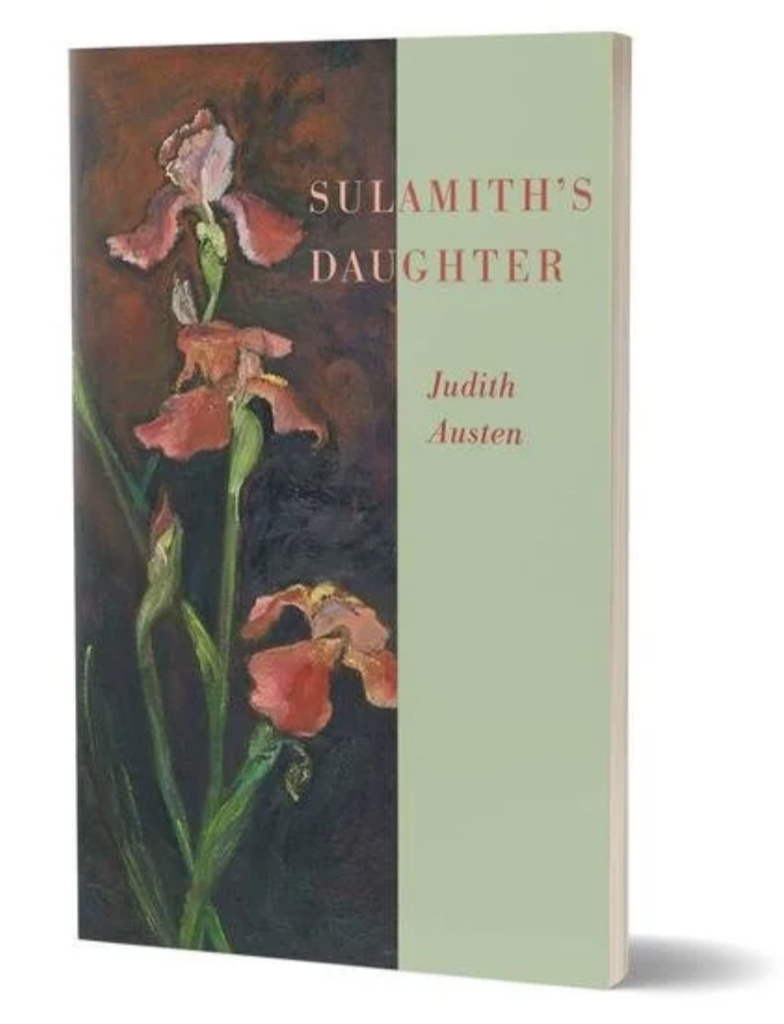
2018 Sulamith’s Daughter: A Memoir, self-published. ISBN 978-0-692-17373-2.
1988 High Flyers: The Gifted in Art, Shady Hill Journal.
1987 Acoma Potter, Evelyn Ortiz, Shady Hill News.
1982 Responding to Children’s Art, In Touch Magazine, University of Massachusetts Amherst.
-
2021 Studio-tour video, AustenArts.com.
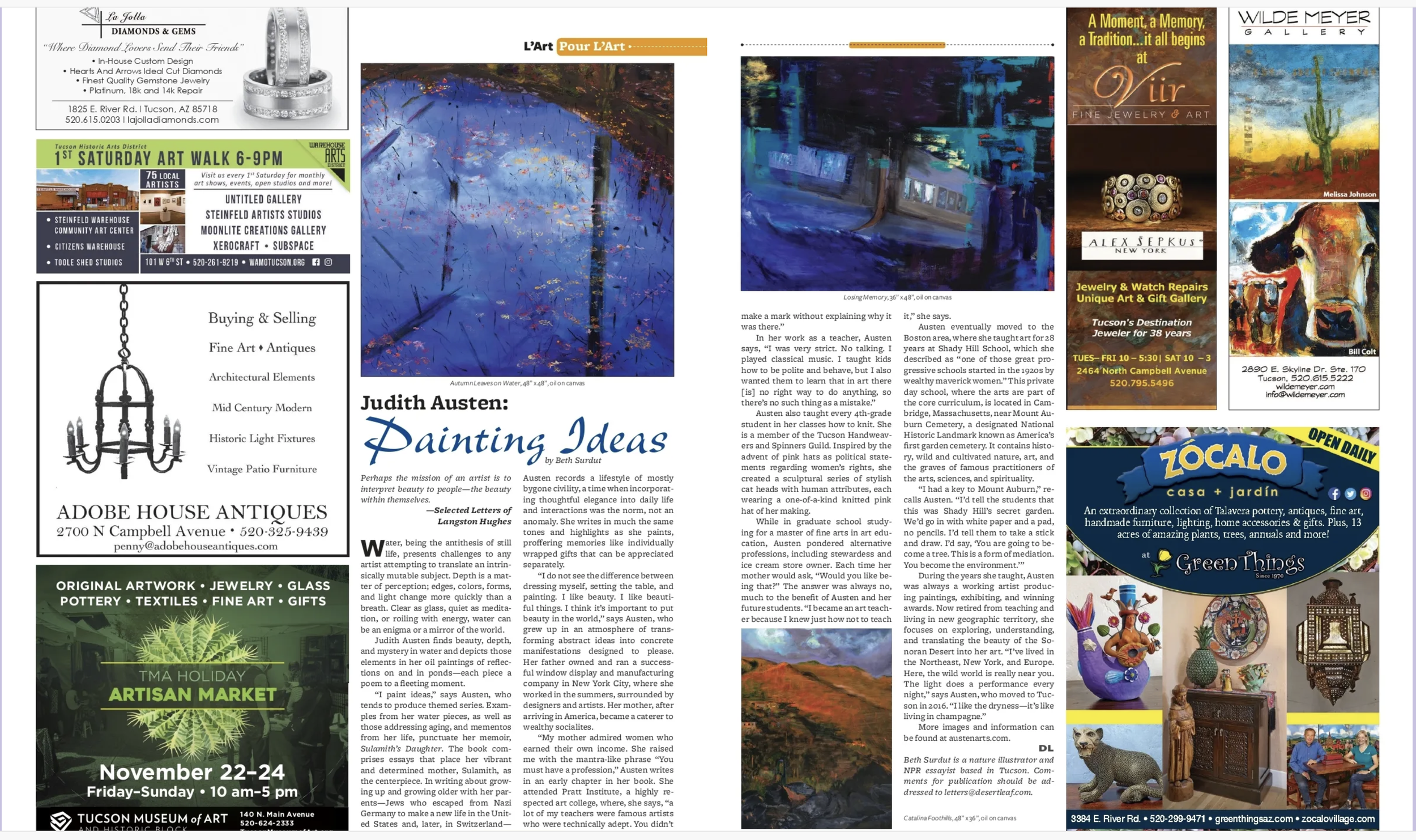
2019 Beth Surdut, Painting Ideas, The Desert Leaf, November 2019.
2019 Gloria Knott, Take a Peek into 150 Pima County Artist Studios Starting This Weekend, Arizona Daily Star, October 31, 2019.
2001 Karen N. Schneider, To Knit Is a Hit, The Christian Science Monitor, December 4, 2001; illustrated feature on Austen’s knitting curriculum for grades 4–8.
-
2025–26 Education Team, PaperWorks: The Sonoran Collective for Paper and Book Artists, Tucson, Arizona.
2025 A Painter’s Journey: From 18 to 81, invited program, PaperWorks, Tucson, Arizona.
2016–present Private studio instruction in painting and art, Tucson, Arizona.
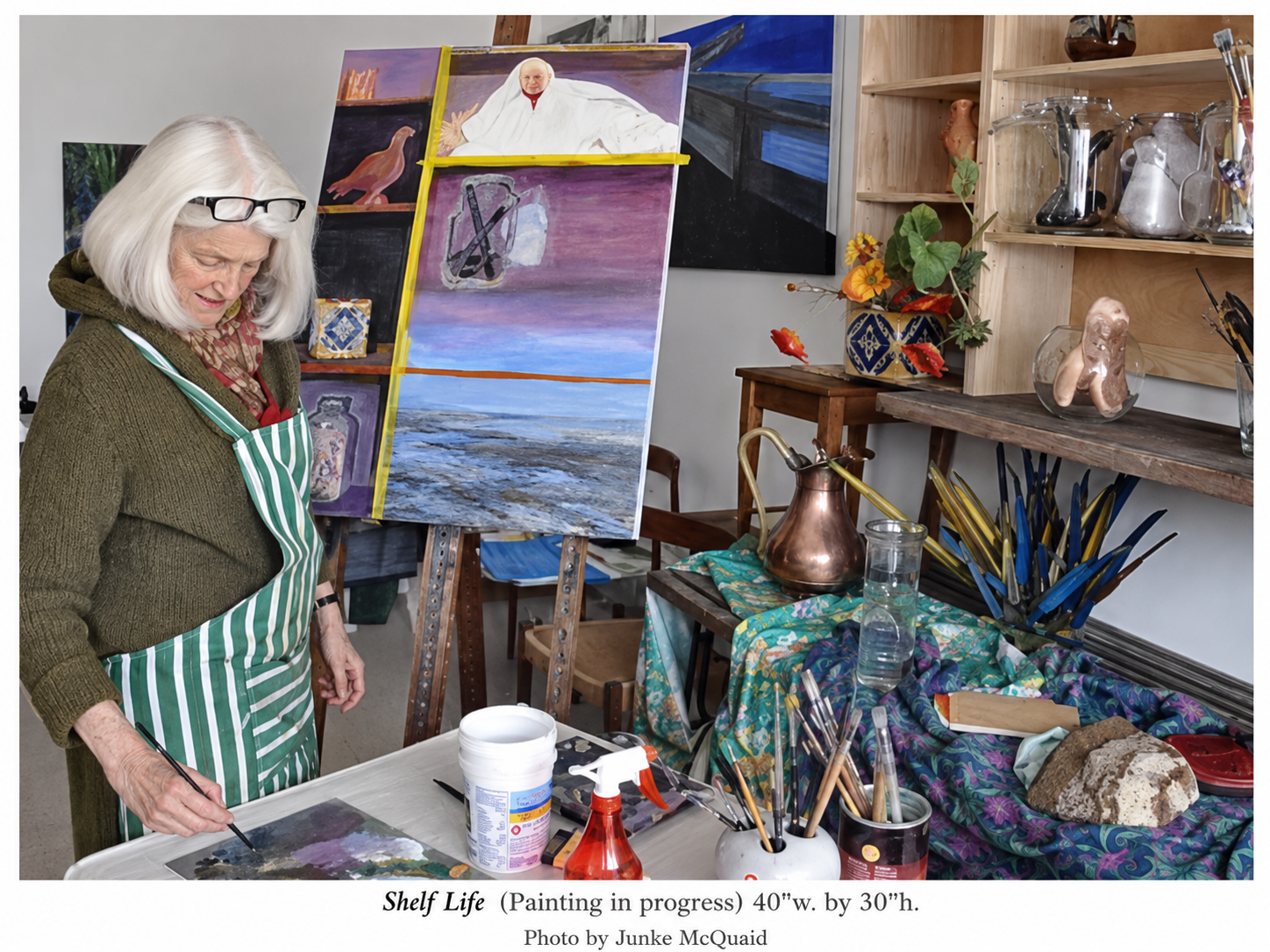
2013 Invited presentation and painting demonstration, Concord Art Association; presented the Aging series and demonstrated work on Shelf Life.
1991 East-West Center teacher-training program, Honolulu, Hawaii; program focused on Asia, the South Pacific, and teaching about the Pacific Rim.
1981–2009 Studio Art Teacher, Shady Hill School, Cambridge, Massachusetts. Taught elementary- and middle-school students, trained apprentice teachers, and offered adult oil-painting classes to the wider Shady Hill community.
1974–78 Tenured Art Teacher, grades K–5, Carrie E. Tompkins Elementary School, Croton-on-Hudson, New York.
1968–70 Art Teacher, Bank Street School for Children, New York, New York.
1966–68 Third-Grade Teacher, P.S. 122, New York, New York.
EXHIBITION HIGHLIGHTS
PRESS & FEATURES
Painting Ideas
The Desert Leaf, November 2019
By Beth Surdut
A profile of Judith Austen and the ideas, observations, and experiences that shape her painting practice.
AUTHOR
Judith Austen is also the author of Sulamith’s Daughter, a memoir exploring family history, memory, survival, and inherited experience.
PUBLICATIONS
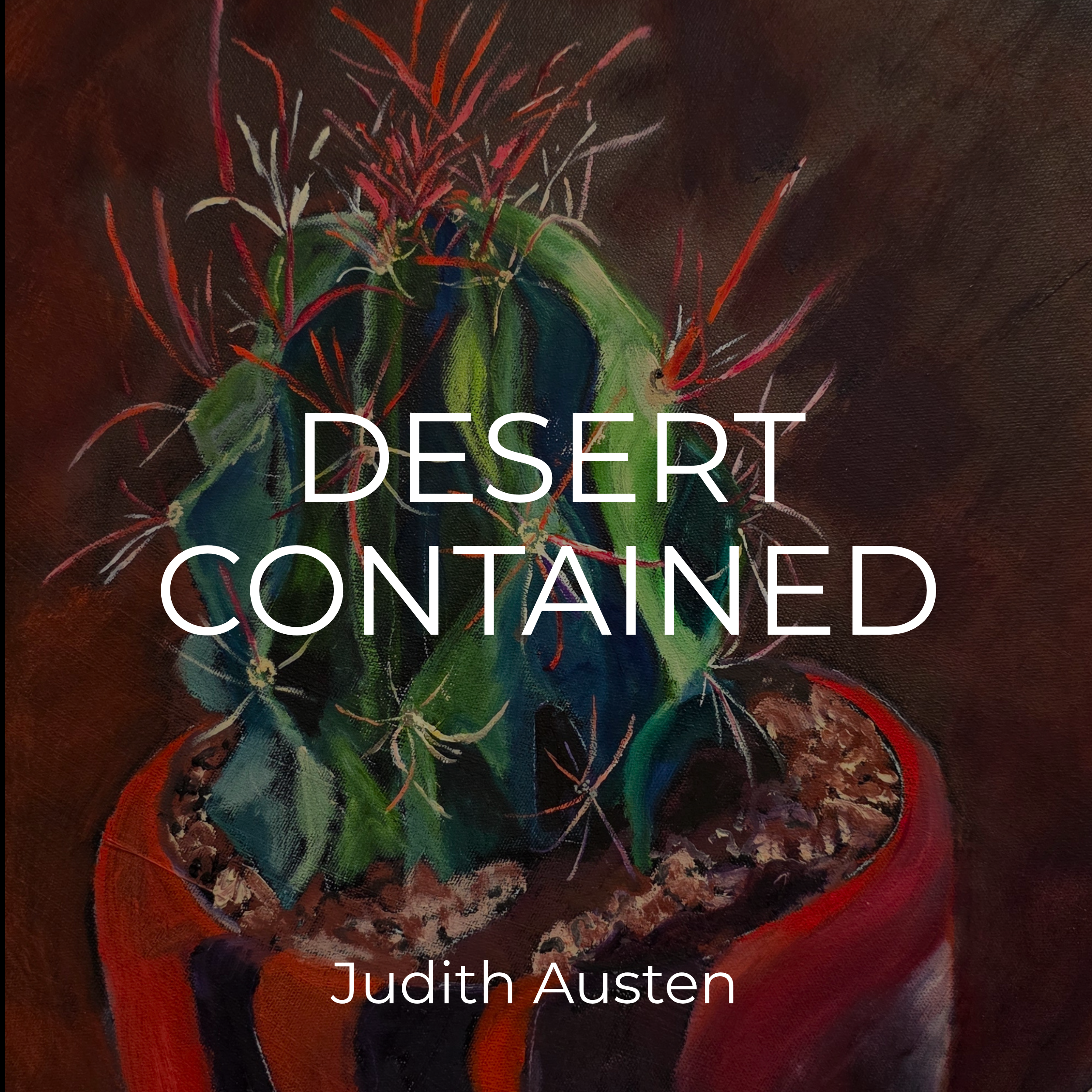
A digital exhibition catalogue exploring Judith Austen's ongoing series of cactus portraits and desert still life.
SELECTED SERIES
Desert Contained
The desert landscape is vast and overwhelming. To bring it into a more intimate scale, I planted cacti in pots, treated them like pets, and painted them as portraits.
→ View Desert Contained
Water Close-Up / Seascapes
Open water can be nature's inviting mirror of tranquility, a sanctuary to linger by, or it can turn to a treacherous turbulence, terrifying and real. I am the shorebird poised for the visual moment I want to grab and get down as mine, always in oil paint. During the transition from my home studio to a commercial space, I found myself painting on location at the water's edge and also taking photographs so as to finish some paintings in the studio. These photos, enlarged and deliberately distorted, serve as departure points for new paintings within the ongoing series, Water Close-up
When I moved to New England, where I lived much of my adult life, I spent my summers painting water from the shore. Most of these took place over many sessions, the wind howling around me, tide coming and going, and the comfort of lobstermen’s voices carrying over to where I perched. The light and tide could change so fast that some paintings had to be finished in one sitting. Even if I photographed the scene, when I got back to my studio, the painting had a sense of presence totally other than a camera's blink.
→ View Water Close-up / Seascapes
House Paintings
I fall in love with houses. I don't want to own them; I want to get them down on canvas exactly as I feel them to be. I march up to the front door, ring the bell, and ask permission to perch on the property until I quench my passion. Rarely does the owner want to buy the painting. “You didn't paint the one tree I planted myself.” Or “The flower bed you forgot is the only thing that wasn't here before I came.“ No one “owns” a house. We are all temporary occupants just passing through; however, I’ve got my version down on canvas.
→ View House Paintings
Surrealism
I am a big nightdreamer. Many of my ideas come in my sleep, albeit some of them more comforting than others. When I get an idea and move it onto canvas, once I hit a certain “tipsiness” in the painting, I get a giddy feeling of satisfaction. Anthropomorphism is as comforting to me as my native tongue, so inanimate objects as alive is no different than playing with dolls, building sand castles, or flying in my dreams.
→ View Surrealism
Abstract Works
Abstracts are about ideas dreamt into color. A series can begin with an idea as academic as Primary Colors and then allow me to go where it takes me on canvas. Or it can be about a color I need in the same way as a food I may crave. This can take the form of paint or knitting, the latter enabling me to physically hold and feel the color. In facing the death of my parents, painting as I felt them allowed me the transition on my own terms, leading to an acceptance with heart. How a viewer may experience an abstract can be as personal and self-referential as the artist who painted it.
→ View Abstract Works
Desert Plein Air
Plein air painting is being in the moment. A cloud can cover a mountain and shadow a cactus. The sun may set a mountain on fire or bake the paint on the canvas. The intensity of being “out there” is a loss of self and becoming one with the present.
→ View Desert Plein Air
Landscapes
Works combining materials and processes across periods of experimentation.
→ View Landscapes
Mixed Media
Like all pack rat art-makers, I lovingly collect odd things such as fabrics, papers, foils, strings, ribbons, and yarns, that might one day serve as collage material. This is true of certain paintings too. What may have started out an idea for a painting on canvas could be enhanced by the contrast of textures and forms created by collage. It is playful, no rules, and great fun
→ View Mixed Media
Aging
When I turned sixty, an age I felt okay about, nothing I dreaded, until I entered my local hospital for a routine mammogram. For the first time ever, I heard myself say, "Well, Judith, this is the place where you will probably die." The test results were fine, nothing wrong, everything normal. However, the acknowledgment that my life was two-thirds lived and I was living on the last one-third edge, stirred me. The paintings in this series are about aging, the feelings encountered while living my life when others are still living the first two-thirds of theirs.
→ View Aging